Institutional capital is retreating from the frontier. Local capital is following it out. The system that promised to integrate the periphery is quietly concentrating itself at the core.
For two decades, the architecture of global finance rested on a simple promise: capital would flow outward from developed markets into the frontier and emerging economies that needed it, gradually integrating them into the global system. This was "inclusive capitalism"—a vision of expanding participation, deepening liquidity, and bringing the periphery into the mainstream.
The term itself has an interesting lineage. It was popularized in the 2000s by scholars like C.K. Prahalad, who argued that the world's poor represented untapped markets rather than burdens. The Council for Inclusive Capitalism, founded by Lynn Forester de Rothschild after a meeting with Pope Francis in 2019, later institutionalized the phrase as a call for business to "profitably work for the common good." The movement's ambitions were later echoed by Klaus Schwab's concept of "stakeholder capitalism"—the idea that corporations should serve all stakeholders, not just shareholders.
That promise is now being quietly unwound.
The retreat is not the result of a single policy decision or a coordinated strategy. It is the cumulative outcome of individual actors responding to the same structural incentives: liquidity, scale, and the perception of safety. The frontier is losing its place in the global capital order—not by design, but by the rational choices of investors who no longer see the returns justifying the risks.
The most concrete symbol of this retreat is the liquidation of BlackRock's iShares MSCI Frontier and Select EM ETF (FM)—the world's only physical frontier-market ETF—which closed in January 2025. The fund had once provided institutional investors with exposure to markets like Vietnam, Romania, and Kazakhstan. By the time it closed, its assets had shrunk to roughly $400 million, and BlackRock cited "persistent liquidity challenges" and the inability to operate in markets where "liquidity is not there."
The reasons were structural. The underlying index had been "progressively denuded" as countries graduated to emerging-market status, leaving a smaller and less liquid pool of investable countries. In markets like Nigeria, investors struggled to repatriate funds—a problem an ETF structure cannot tolerate.
For institutional allocators, the message was clear: the plumbing that once made frontier exposure accessible has been dismantled.
If foreign institutional capital is retreating, one might expect local capital to fill the void. In several frontier and emerging markets, the opposite is happening: local investors are moving their money out.
China offers a striking example. For years, mainland investors used cross-border brokers like Futu and Tiger Brokers to buy US-listed stocks, particularly technology companies. In May 2026, the China Securities Regulatory Commission announced penalties against these firms for operating without a license, describing their activities as "illegal cross-border securities and futures fund business." The regulatory action was framed as a defense of domestic market order, but it also revealed a deeper truth: a significant volume of Chinese household capital had been flowing into US tech stocks rather than into domestic equities.
The Chinese state moved to close that channel. But the underlying dynamic—local investors seeking better returns abroad—is not unique to China. It reflects a broader pattern: when domestic markets are perceived as less attractive than developed alternatives, capital finds a way out, regardless of regulatory barriers.
Bulgaria offers another clear case. Bulgarian retail investors are increasingly focused on American markets, with NVIDIA identified as the favorite U.S. stock among Bulgarian investors on platforms like Freedom24. Data from the platform shows Bulgarian clients are drawn to speculative and thematic plays—CleanSpark, BioSig, Circle Internet Financial—alongside leveraged ETFs. The profile is of a young, active investor seeking risk and return in global markets, not in the domestic exchange.
Meanwhile, the Bulgarian Stock Exchange faces structural challenges that have been documented by the CFA Society Bulgaria. The market suffers from "chronically low liquidity," a "limited number of public companies," and "low participation of individual investors." Bulgaria was removed from the frontier market list, and analysts argue the country lacks a clear vision and coherent state strategy for its capital market. The exchange exists—but it functions as a marginal institution, not a meaningful channel for domestic savings.
Romania presents a similar picture. The Bucharest Stock Exchange has performed extraordinarily well—the BET-TR index delivered a total return of 758% in euro terms over the past decade, outperforming even the NASDAQ 100. Yet the market remains structurally thin. Romanian retail investors, according to Freedom24 data, favor balanced portfolios combining U.S. tech stocks (NVIDIA, Microsoft, TSMC) with government bonds and high-coupon instruments. The domestic exchange is not the primary destination for Romanian household capital.
Interactive Brokers added Romanian stocks to its platform in 2026, a move described as "eliminating the largest barrier to access for foreign retail capital." But the same platform also gives Romanians seamless access to Apple and Nvidia—and that is where the capital flows.
Serbia illustrates the pattern in its starkest form. The Belgrade Stock Exchange (BELEX) is preparing for new listings, yet "Serbian investors remain largely absent from their own capital market." The market is described as "shallow, illiquid and heavily dependent on a small number of institutional players." Households overwhelmingly prefer real estate, bank deposits, or informal investment channels. Analysts note that Serbia "lacks a culture of equity investment."
Guidance for Serbian investors on how to invest in the S&P 500 is readily available, with the recommended allocation being 80-90% in global index ETFs and only a small fraction in local stocks. The domestic exchange is treated as a peripheral option, not a primary destination.
Bangladesh offers a different but related dynamic. The Dhaka Stock Exchange has seen periods of recovery, but structural issues persist. The SME board and debt securities board "failed to get a bright start" due to low investor participation and lack of confidence. For Bangladeshi investors, platforms like nsave now provide direct access to U.S. stocks—including NVIDIA, Apple, and Tesla—starting from $1, with zero order fees. The pitch is explicit: "You already have direct access to a different investment layer: the US stock market." The domestic exchange is positioned as one option among many, not the default.
Vietnam presents the paradox most clearly. The country was upgraded from frontier to secondary emerging market status by FTSE Russell in September 2026—a structural achievement that should, in theory, attract new institutional inflows. Yet foreign investors have been persistent net sellers throughout 2026, with cumulative net selling on the HoSE reaching approximately 93 trillion VND by August.
Foreign capital remains in Vietnam—foreign investors still hold over 1 trillion VND worth of Vietnamese stocks, concentrated in large, liquid companies like Vietcombank and Vinamilk. But the flow is one-directional: existing positions are being held or trimmed, while new capital is directed elsewhere. The upgrade itself does not reverse the trend.
Domestic capital has partially filled the gap—Vietnamese individual investors have been net buyers for eight consecutive months. But the broader picture is of a market where foreign participation is declining and the structural upgrade has not yet translated into renewed inflows.
Kazakhstan offers perhaps the most explicit evidence of the trend. The number of retail investment accounts in Kazakhstan reached a record 4.9 million by the end of 2025, with retail investors now accounting for more than 50% of secondary-market equity trading volume. Yet the domestic market is described as having "extremely low liquidity." One expert noted that an investment of just $100,000 to $200,000 would be enough to "influence the market." The total trading volume of the KASE index is approximately $1 million—a figure that underscores how thin the market remains.
Where is the retail capital going? A broker in Kazakhstan explained the demand: "Investors want to hold both Kazakhstan's blue chips and U.S. tech giants in their portfolios." The platform ITS now offers Single Stock ETFs on Apple, Microsoft, Nvidia, Alphabet, and Meta, allowing investors to build diversified portfolios with as little as $100. The pitch emphasizes "access to technology" and "companies driving artificial intelligence and global innovation that are not represented in the local market."
The KASE has seen record trading volumes—261.9 trillion KZT ($539 billion) in the first half of 2026, up 48.8% year-on-year. But much of this volume is in repo operations and government securities, not equity market activity. The equity market remains small, concentrated, and illiquid.
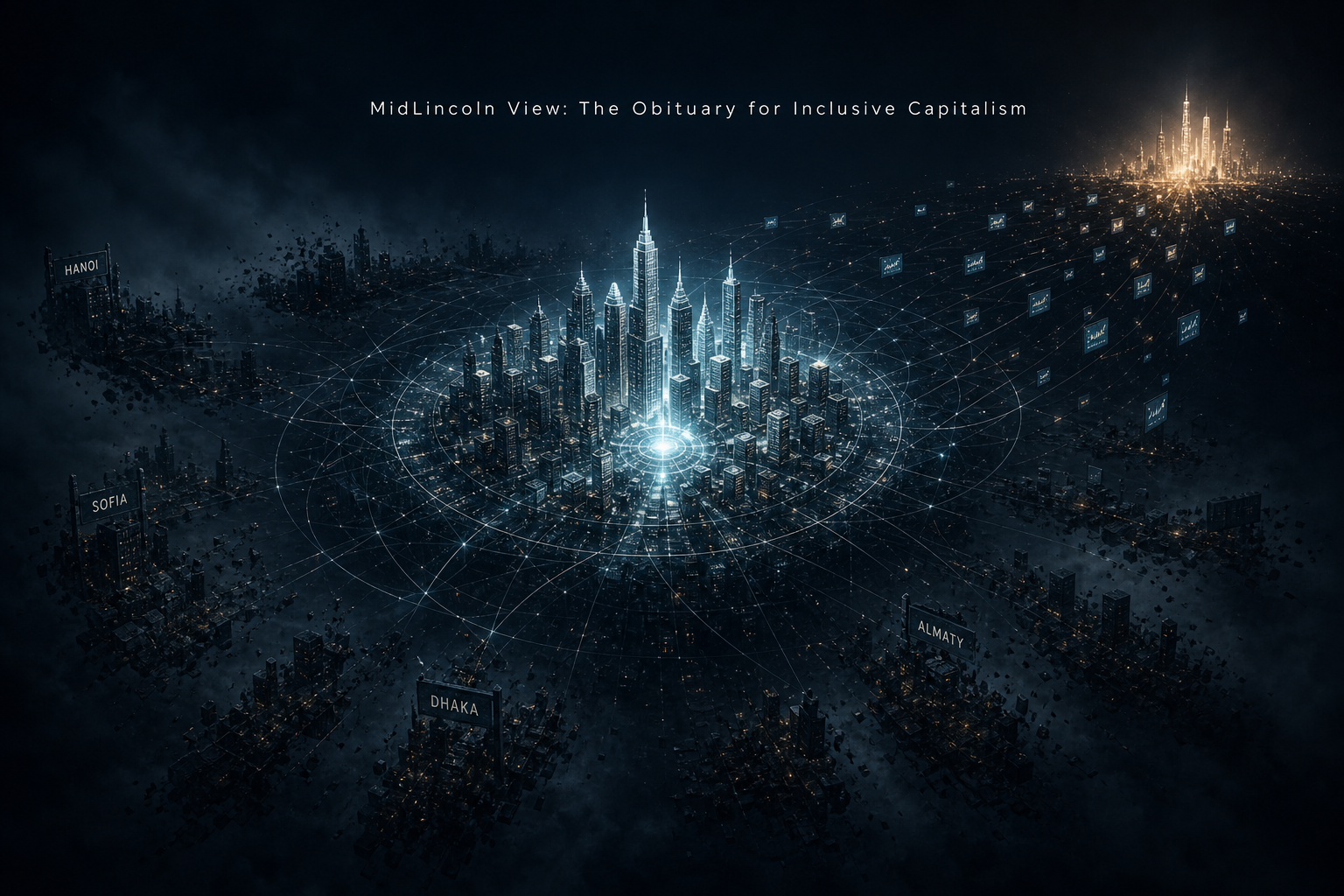
It is not only stocks and bonds that are drawing capital away from frontier markets. Cryptocurrency—once the domain of a niche, risk-tolerant investor base—has become a significant competing destination for speculative retail capital.
Recent data from market maker Wintermute, drawing on JPMorgan retail flow data, shows a structural shift since late 2024: retail investors have been consistently withdrawing from crypto and rotating into US equities. Bitcoin spot ETFs saw nearly $3 billion in net outflows over a recent three-month period, while gold-themed ETFs attracted over $20 billion in net inflows.
The reasons cited are directly relevant to the frontier-market thesis. Wintermute notes that the volatility advantage that once made crypto uniquely attractive to retail investors has been structurally compressed—Bitcoin's realized volatility ratio to the Nasdaq fell below 2x in the first half of 2025. At the same time, AI tools have given retail investors an analytical edge in equity markets that they cannot replicate in crypto, where consensus valuation frameworks are absent and the universe of tokens keeps expanding.
The implication for frontier markets is stark: the pool of speculative capital that might once have flowed into small, illiquid exchanges is instead being absorbed by US tech equities and, increasingly, by crypto assets that offer similar volatility without the repatriation risks and governance concerns of frontier exchanges. A retail investor in Almaty or Dhaka now has more competing destinations for speculative capital than at any point in history.
A parallel trend is unfolding in ESG investing, which only a few years ago was heralded as the next evolution of stakeholder capitalism. That wave is now receding.
According to Morningstar data cited by Reuters, European sustainable fund launches fell to a record low of 13 in the second quarter of 2026, down nearly two-thirds from 35 a year earlier. With 64 funds closing, it meant nearly five funds closed for every launch—the widest gap since at least early 2023. In the United States, just three sustainable funds launched against 22 closures.
The retreat has multiple causes: weak relative performance (the MSCI ACWI SRI index returned roughly 56% over five years to July 2026, versus 65% for the broad MSCI ACWI), a US political backlash against "woke" investing, and regulatory scrutiny that has made it harder to market funds as sustainable without substantiation. DWS was fined €25 million by German prosecutors over misleading sustainability statements.
The broader stakeholder capitalism movement has also lost momentum. Klaus Schwab announced his departure as executive chairman of the World Economic Forum in 2024, and Jamie Dimon—once a prominent advocate of stakeholder capitalism—stopped overtly celebrating the Business Roundtable's commitment. The era of loudly professing belief in ESG and stakeholder capitalism appears to be over.
This matters for the frontier thesis because ESG was one of the few remaining channels through which institutional capital flowed into smaller markets. Sustainability-themed funds often allocated to frontier economies as part of their "impact" mandates. As that channel narrows, another source of demand for frontier assets is withdrawn.
Across these markets, the pattern is consistent:
The events surrounding Russia's asset freeze and sanctions are an incident within this broader trend—a reminder that the global financial system can exclude jurisdictions when geopolitical circumstances demand it. But the retreat from the frontier was already underway before those measures. The sanctions accelerated a process that was structural, not political.
The phrase "inclusive capitalism" was always aspirational. It suggested a system that would gradually extend the benefits of global capital markets to the periphery, integrating smaller economies into the financial mainstream.
What we are witnessing is the opposite. The vehicles that once channeled capital outward are disappearing. The local capital that might have filled the gap is seeking returns in developed markets, crypto, and gold. The structural upgrades that were supposed to attract inflows are being met with indifference. The ESG wave that promised a values-driven allocation of capital is receding. And the geopolitical shocks that periodically disrupt the system remind everyone that inclusion was never unconditional.
This is not a conspiracy. It is the outcome of rational decisions by institutional investors, fund managers, and local savers responding to incentives. Frontier markets are illiquid, difficult to access, and politically uncertain. Developed markets offer scale, transparency, and exposure to the most compelling growth narratives of the moment. The capital goes where it perceives the best risk-adjusted return.
The irony is that a system built on the promise of inclusion is quietly becoming exclusionary—not by design, but by the cumulative effect of individual decisions. For institutional investors, the question is whether this trend is reversible, or whether the frontier is destined to remain a niche, accessible only to those willing to bear the liquidity risk that most allocators can no longer afford.
A route-based system that helps users navigate concrete personal change while enabling narrow themed deployments for organizations.
View Opportunity MidLincoln OpportunityA deterministic prime-based blockchain architecture built around useful computation, cooperative verification, and post-quantum-oriented infrastructure.
View Opportunity MidLincoln OpportunityA global invoice financing and trade finance operating platform for SMEs, counterparties, and capital partners.
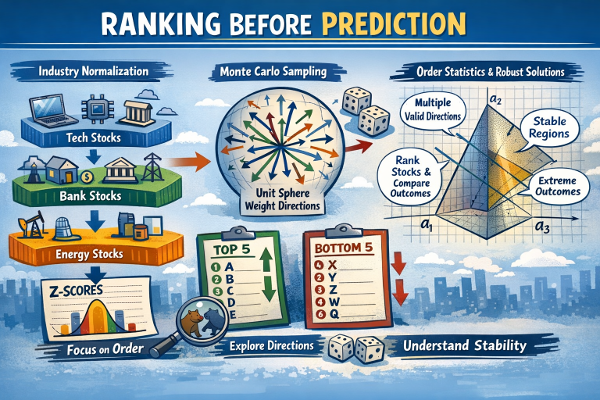
View Opportunity MidLincoln Research & AdvisoryContextual ranking research and advisory for equity selection, sovereign ranking, and model-stability diagnostics under regime uncertainty.
View Offering