MidLincoln View: Five Civilizations, Five Ways to Allocate Capital

How America, Europe, China, India—and SpaceX—Are Competing to Define the Future — July 6, 2026

For much of the twentieth century, capitalism appeared remarkably uniform. The United States defined the rules of modern finance. Europe refined them through institutions. Japan demonstrated how manufacturing excellence could be built within them. Emerging economies largely sought to imitate the same model.

Today that consensus has disappeared.

The world is no longer debating whether capitalism works. It is debating which version of capitalism allocates capital most effectively.

Every civilization solves the same economic problem differently. The differences are not accidental; they reflect deeply rooted beliefs about risk, trust, authority, and the future.

Capitalism is often described as a political or economic system. In practice, it is an allocation mechanism. Every society must continually answer the same question:

Where should today's savings be invested to maximize tomorrow's productivity?

Different civilizations are now giving very different answers.

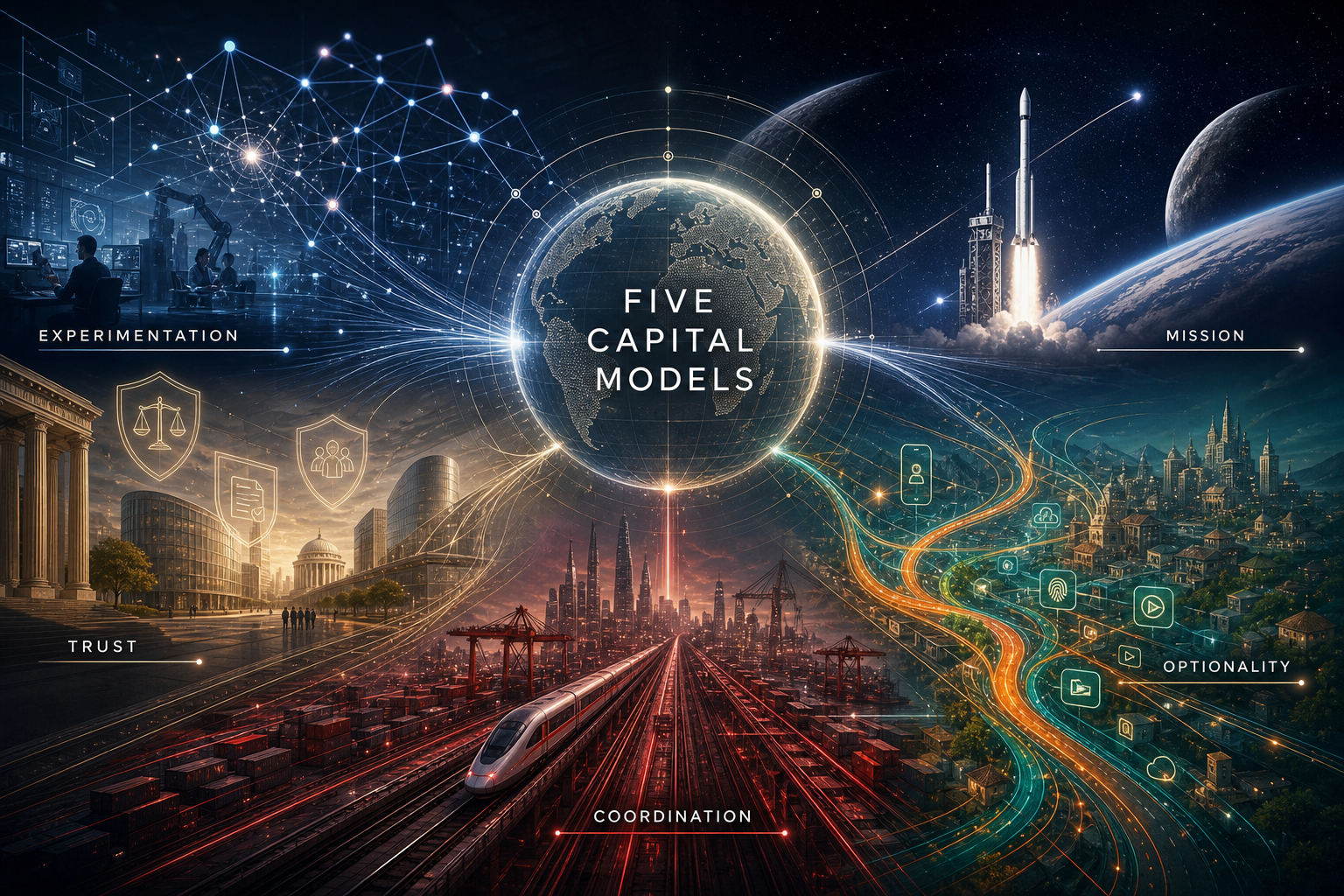
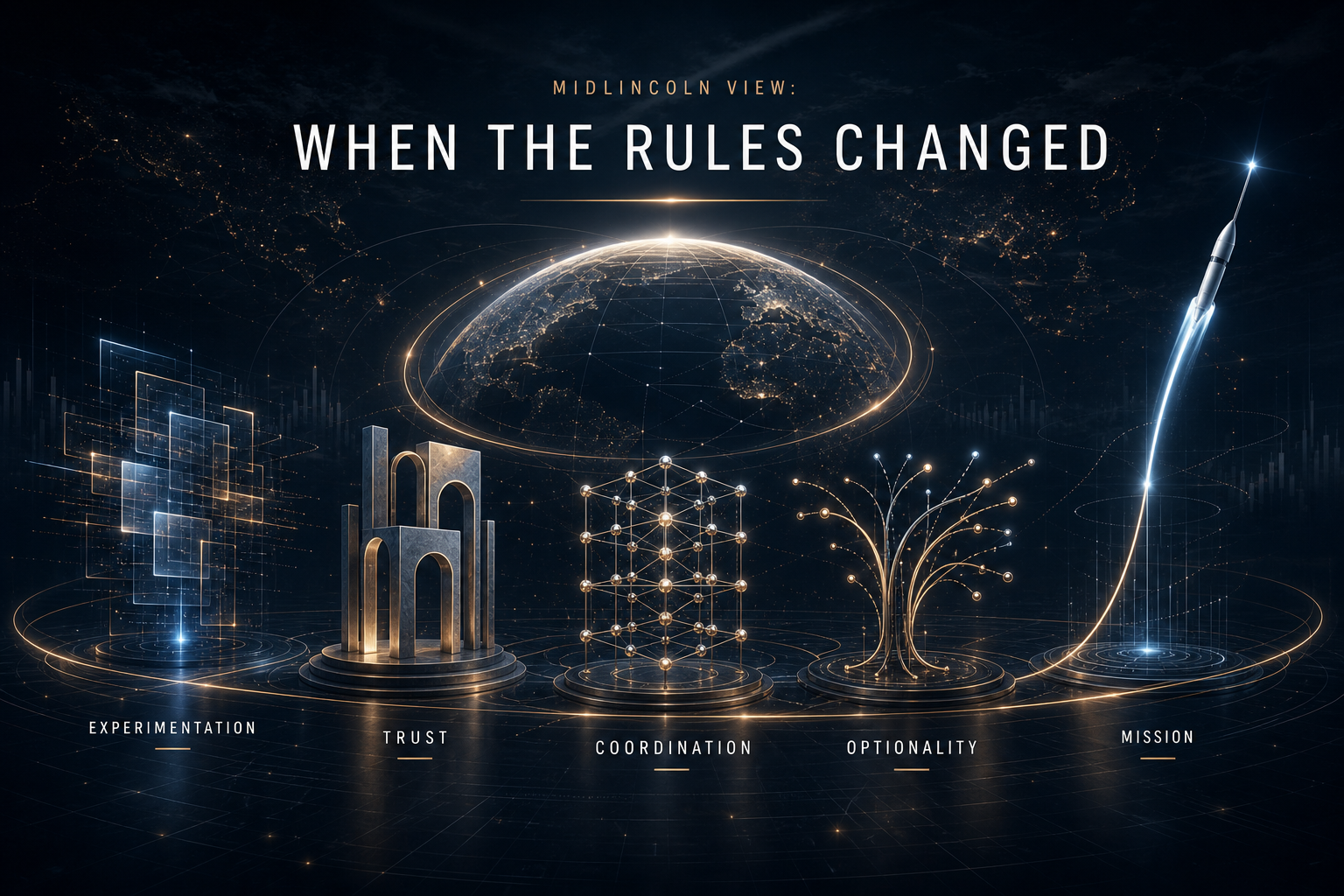
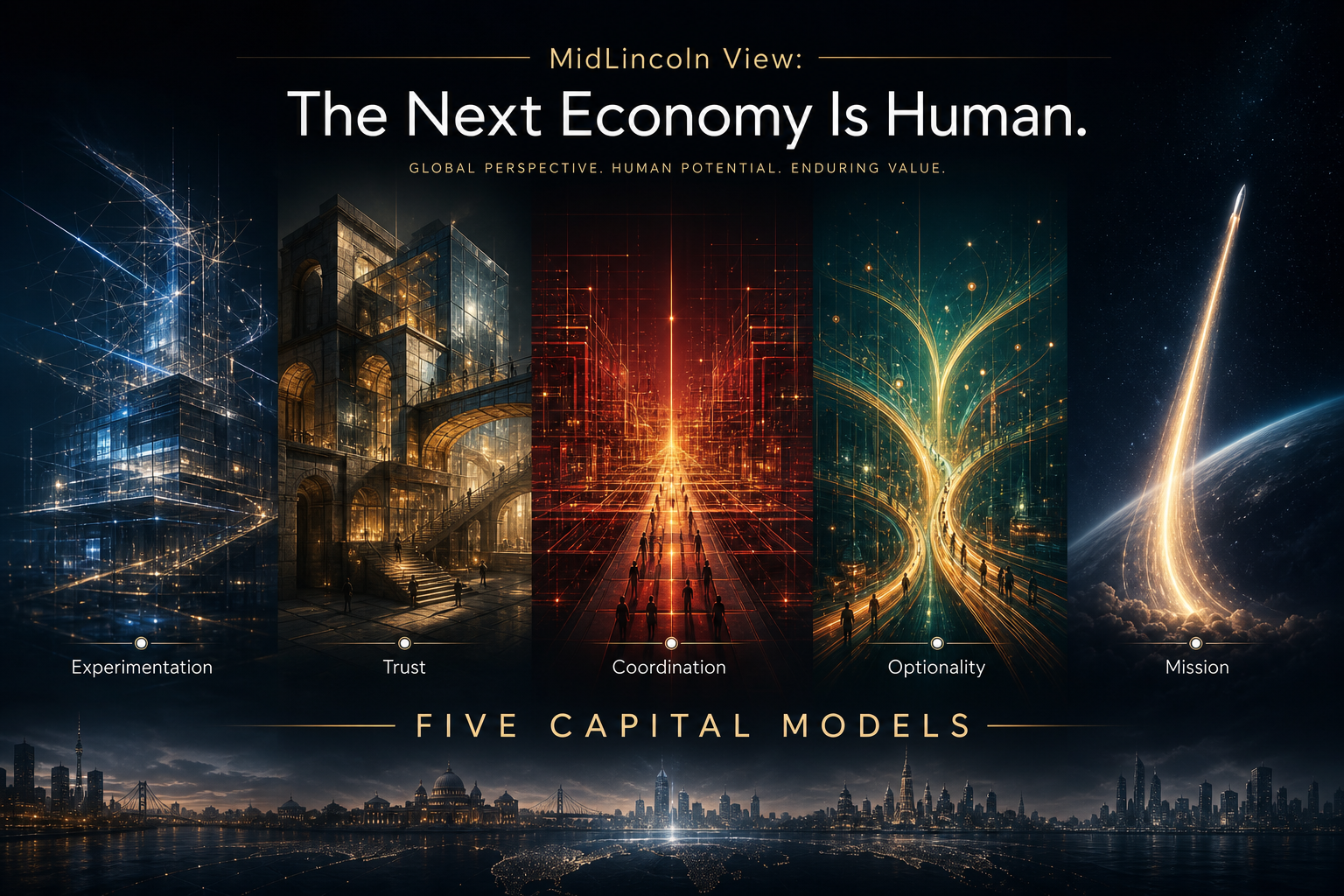
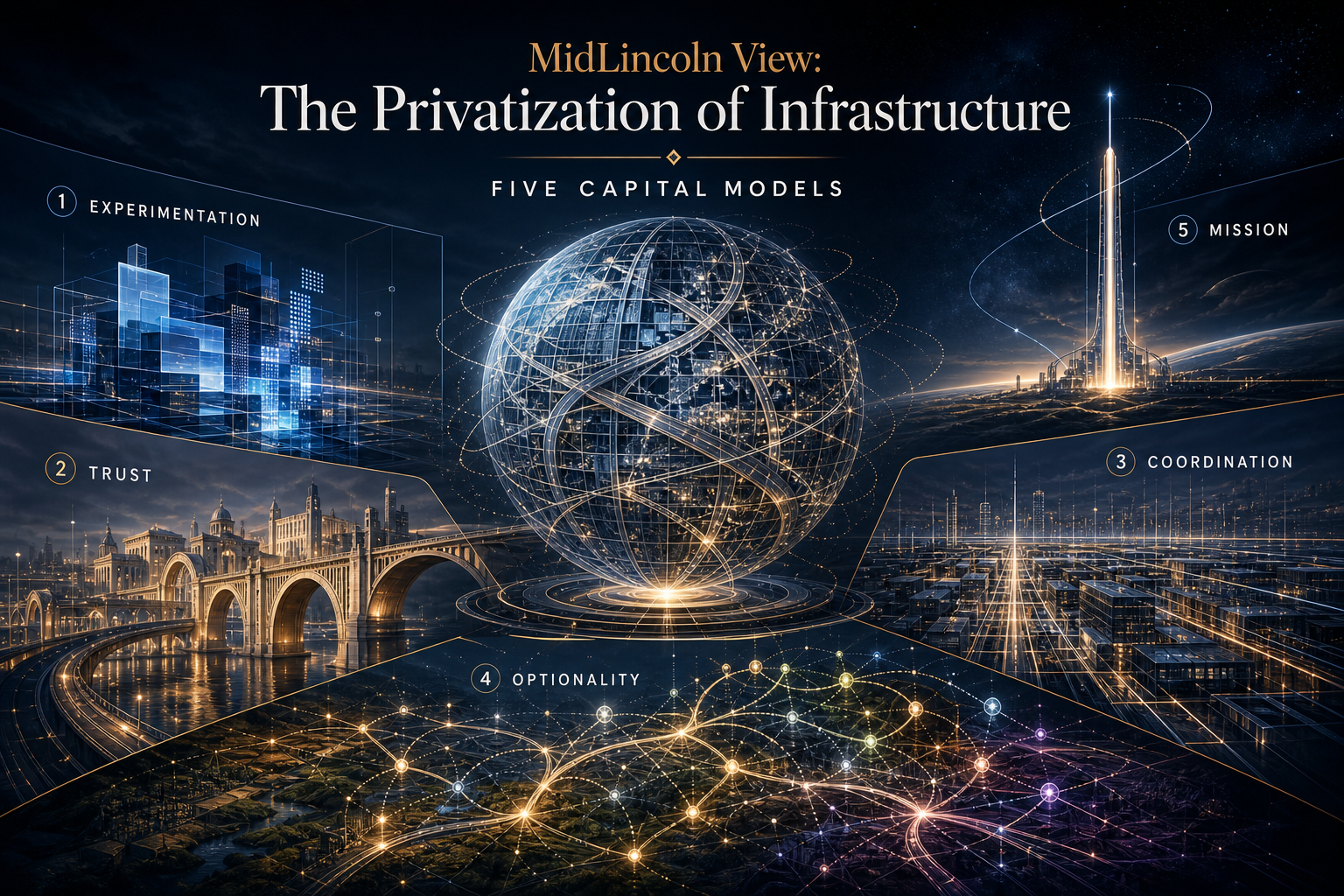
  • America allocates capital toward experimentation.
  • Europe allocates capital toward trust.
  • China allocates capital toward coordination.
  • India allocates capital toward optionality.
  • SpaceX demonstrates a fifth model—one in which mission rather than institutions becomes the primary allocation principle.

These models are no longer competing merely for GDP growth. They are competing to define the architecture of the next global economy.

The outcome will determine where capital flows for decades.

I. America Optimizes Experimentation

America's comparative advantage is not technology.

It is tolerance for failure.

The American model operates on a simple premise: most experiments will fail, but the ones that succeed will change the world. The system is designed to maximize the number of experiments, not the success rate.

Consider the mechanics:

  • Bankruptcy is a feature, not a flaw. It allows capital to be reallocated quickly.
  • Labor mobility means talent flows to where it is most valued.
  • Venture capital provides risk capital at scale, accepting that most investments will return nothing.
  • Universities produce research that industry commercializes.
  • Immigration brings the world's best minds to American laboratories and companies.

But America does something else that is less visible.

It recycles failure.

Failed founders raise money again. Failed engineers join another startup. Failed products create patents. Silicon Valley is essentially a machine that converts failure into knowledge.

This creates volatility. It creates inequality. It creates disruption. Entire industries are destroyed and rebuilt within a generation.

But it also creates Nvidia. OpenAI. SpaceX. Amazon.

The American model produces extraordinary winners precisely because it tolerates extraordinary losers.

The weakness is becoming visible: the social fabric fraying under the stress of constant disruption. The question is whether the system can sustain enough trust to continue funding the next wave of experiments.

II. Europe Optimizes Trust

Europe deliberately sacrifices speed.

Why? Because trust is a form of capital.

The European model asks a different question: How much growth are we willing to sacrifice for stability? The answer, historically, has been quite a lot.

Consider the European approach:

  • Consumer protection that reduces risk for households
  • Food safety standards that exceed global norms
  • Bank regulation that prioritizes depositor safety
  • Worker rights that reduce labor market volatility
  • Environmental standards that internalize externalities

These measures reduce productivity in the short run. They increase compliance costs. They slow innovation. They discourage entrepreneurship.

But they also build confidence.

Confidence itself is an economic asset. When European consumers trust their food, their banks, and their regulators, they spend and invest with less uncertainty. When European workers feel secure, they support the political system that enables markets to function.

Why does Europe value trust so highly?

Because Europe remembers instability.

Two world wars. Hyperinflation. Communism. Authoritarianism. The European Union is almost an economic insurance policy against European history. The institutions that seem bureaucratic today were built to prevent the catastrophes of yesterday.

The European model is the insurance policy of capitalism. It reduces tail risk at the cost of reducing upside potential.

The challenge is existential: can Europe reform its regulatory apparatus quickly enough to remain competitive? Or will it become the world's most comfortable museum—pleasant to visit, but irrelevant to the future?

The data is not encouraging. European productivity growth has lagged America for two decades. European technology companies are almost entirely absent from global rankings. European capital markets are smaller, less liquid, and less dynamic.

III. China Optimizes Coordination

China asks a different question entirely.

Instead of which company deserves capital?, China asks which industry deserves capital?

This is the logic of coordinated investment.

  • High-speed rail was built at a scale that no private market would have funded.
  • Solar energy was subsidized until it achieved global cost leadership.
  • Electric vehicles received state support until they became competitive.
  • Semiconductors are now the target of massive state investment.
  • Infrastructure is planned decades in advance.

The state coordinates investment across industries, regions, and time horizons. This creates enormous execution capacity—and sometimes enormous misallocation.

Consider the mechanics:

  • State-owned enterprises implement national priorities
  • Industrial policy directs capital toward strategic sectors
  • Local governments compete to attract investment
  • Credit allocation favors politically preferred outcomes

The benefit: national priorities become reality much faster than democracies can manage. China built more high-speed rail in a decade than Europe built in a century.

The risk: coordination inevitably becomes harder as economies become richer and more complex. What worked at one stage of development may fail at another. The system can become a monument to past priorities rather than an engine for future growth.

The ultimate question for China is not whether the model works today. It is whether the model can adapt when today's priorities become tomorrow's liabilities.

IV. India Optimizes Optionality

India's advantage is not cheap labor.

It is late development.

Late developers can copy what works. They can adopt best practices without the cost of discovering them. They can leapfrog generations of infrastructure.

Consider what India has skipped:

  • Payments skipped credit cards and went directly to mobile banking.
  • Communications skipped landlines and went directly to mobile phones.
  • Identity skipped physical documents and went directly to digital ID.
  • Retail skipped large-format stores and went directly to e-commerce.

India is still young. Its median age is 28—more than a decade younger than China, two decades younger than Europe. This means India hasn't locked itself into yesterday's infrastructure. It can adopt today's technology without dismantling yesterday's investments.

But India also benefits from institutional optionality.

It is not locked into either American capitalism or Chinese planning. It can selectively borrow from both. It can adopt market mechanisms where they work and state coordination where it is needed. This flexibility is itself a competitive advantage.

The model works like this:

  • Demographics provide a growing labor force
  • Digital infrastructure enables leapfrogging
  • Manufacturing benefits from supply chain diversification
  • Domestic demand grows with the middle class

The challenges are significant: infrastructure deficits, regulatory complexity, educational quality, geopolitical pressures. But the trajectory is clear.

India's capital allocation model is perhaps the closest to classical capitalism of the five. It relies on markets, private enterprise, and demographic momentum. Its success depends not on brilliant planning or exceptional regulation, but on the simple arithmetic of a growing population becoming more productive.

V. SpaceX Optimizes Mission

SpaceX is not "founder capitalism."

It is something bigger.

Every other system begins with constraints: governments, regulations, committees, budgets, quarterly earnings. SpaceX begins with one question:

What must exist?

Everything else follows.

Consider the difference:

  • Traditional aerospace: What can we build within our budget and timeline?
  • SpaceX: What would make humanity multiplanetary?
  • Traditional telecommunications: How do we maximize return on existing infrastructure?
  • SpaceX: How do we connect the unconnected?
  • Traditional government space programs: What is politically feasible?
  • SpaceX: What is physically necessary?

Three different objective functions.

Governments ask: What can we afford?
Corporations ask: What will shareholders accept?
SpaceX asks: What would civilization benefit from?

This is a reversal of the capital allocation equation.

Capital follows mission instead of mission following capital.

That is why reusable rockets happened. That is why Starship exists. That is why Starlink serves millions of customers today.

The model has distinctive characteristics:

  • Founder control that insulates against short-term pressure
  • Mission primacy that overrides quarterly considerations
  • Vertical integration that captures all the economics
  • Iterative development that embraces visible failure as progress
  • Long time horizons that governments cannot match

The risk is equally clear: key-person dependency, capital intensity, hubris, governance failures. SpaceX is the ultimate expression of a single vision. When that vision is accurate, it transforms industries. When it is not, the losses can be catastrophic.

But the model is not unique to SpaceX. It is emerging across industries where founders retain control and refuse to compromise on ambition. The question is whether this model scales beyond exceptional individuals.

Analyst's Takeaway

Let us summarize the five models:

ModelOptimizesMain StrengthMain Risk
AmericaExperimentationInnovationInequality
EuropeTrustStabilitySlower growth
ChinaCoordinationExecutionCapital misallocation
IndiaOptionalityDemographicsInfrastructure
SpaceXMissionRadical innovationGovernance

Investors often compare countries by GDP growth, inflation, or interest rates. These metrics describe the present.

Capital allocation determines the future.

The societies that consistently allocate capital toward productive ideas—while minimizing persistent misallocation—will define the next economic cycle. The competition is no longer between nations alone. It is between different philosophies of how the future should be financed.

America offers returns at the cost of volatility.
Europe offers stability at the cost of growth.
China offers speed at the cost of transparency.
India offers momentum at the cost of infrastructure.
SpaceX offers ambition at the cost of governance.

No model is inherently superior. Each represents a trade-off. The investor's task is not to declare a winner, but to understand the trade-offs well enough to allocate capital accordingly.

The next decade will test all five models. Each will face pressures that expose its weaknesses. Each will reveal whether its strengths are durable or contingent.

Economists often debate whether capitalism is the most efficient economic system. The more interesting question today is which version of capitalism will prove most efficient in allocating scarce capital to the technologies that define the twenty-first century.

The answer may determine not only where investment flows, but which societies shape the next century.

— MidLincoln View

This essay is the first in a four-part series on the forces reshaping global capital allocation. Subsequent essays will examine macro cycles, the economics of wellbeing, and the privatization of infrastructure.

Current Opportunities and Consulting Offers

MidLincoln Opportunity

Sun in the Morning

redsunam.com · B2B2C Guided Change Platform

A route-based system that helps users navigate concrete personal change while enabling narrow themed deployments for organizations.

Current Focus Public opportunity page live. Investor access, deck requests, and product review route through MidLincoln.
View Opportunity
MidLincoln Opportunity

Prime Mining

Deep-Tech Blockchain Protocol

A deterministic prime-based blockchain architecture built around useful computation, cooperative verification, and post-quantum-oriented infrastructure.

Current Focus Frontier protocol opportunity. Public page frames the research, protocol path, raise logic, and investor fit.
View Opportunity
MidLincoln Opportunity

TradeFlow

Global Trade Finance Platform

A global invoice financing and trade finance operating platform for SMEs, counterparties, and capital partners.

Current Focus Invoice financing first, then broader cross-border trade workflows, underwriting, and capital orchestration.
View Opportunity
MidLincoln Research & Advisory

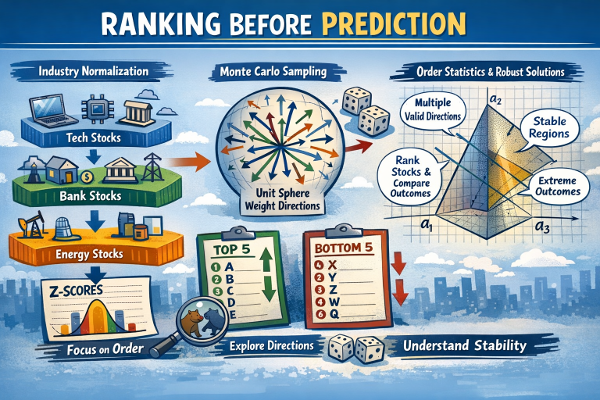
Modern Ranking Systems

Equity & Sovereign Selection Offering

Contextual ranking research and advisory for equity selection, sovereign ranking, and model-stability diagnostics under regime uncertainty.

Current Focus Research and advisory work around ranking geometry, contextual factor systems, and robust selection frameworks.
View Offering